Prescribed by Government, Validated by Science: The Japanese Healing Practice of Shinrin-Yoku That the Wellness Industry Barely Understands
Somewhere between a guided meditation app and a luxury spa retreat, the American wellness industry discovered forests. Suddenly, "forest bathing" appeared on retreat brochures, lifestyle blogs, and the Instagram accounts of people wearing linen in the woods. It sounded ancient, vaguely spiritual, and pleasantly photogenic.
What most of those brochures failed to mention is that Shinrin-yoku (森林浴) — the Japanese practice from which forest bathing derives — is not a trend, not a metaphor, and not particularly glamorous. It is a 40-year-old, government-backed public health program grounded in immunology, psychophysiology, and a distinctly Japanese understanding of the relationship between human beings and the natural world.
A Policy, Not a Pastime
The year was 1982. Japan was in the grip of what sociologists were calling karoshi — death by overwork — and the government was grappling with the health consequences of rapid urbanization and an intensely pressurized professional culture. The Japanese Forestry Agency, under the direction of its then-chief Tomohide Akiyama, formally coined the term Shinrin-yoku and introduced it as a cornerstone of national health policy.
The premise was straightforward: Japan's forests, which cover roughly 68 percent of the country's land area, were an underutilized public health resource. Walking through them — slowly, without destination, with all senses engaged — could serve as a form of preventive medicine. This was not a casual suggestion. It was a policy initiative backed by government funding for research, the development of designated "forest therapy trails," and eventually a formal certification system for Shinrin-yoku guides.
By 2004, the Japanese government had invested approximately $4 million in scientific studies examining the physiological effects of forest environments on the human body. What those studies found was striking enough to reshape how Japan thought about preventive healthcare.
What the Science Actually Shows
The most significant body of research on Shinrin-yoku was produced by Dr. Qing Li, an immunologist at Nippon Medical School in Tokyo and one of the world's foremost authorities on the subject. His work, along with that of colleagues across multiple Japanese universities, established a consistent pattern of findings.
 Photo: Dr. Qing Li, via images.pistonheads.com
Time spent in forest environments — as opposed to urban environments — was associated with measurable reductions in cortisol levels, the hormone most closely linked to chronic stress. Participants in controlled studies showed lower blood pressure and heart rate after forest walks compared to equivalent walks in city settings. Perhaps most remarkably, exposure to forests was linked to significant increases in natural killer (NK) cell activity — the immune cells responsible for identifying and destroying abnormal cells, including those associated with cancer.
The mechanism behind this last finding involves a class of organic compounds called phytoncides — antimicrobial volatile substances emitted by trees, particularly conifers such as cedar and pine. When humans inhale these compounds, the evidence suggests, the immune system responds in measurable ways. The forest, in other words, is not merely a pleasant backdrop. It is a biochemically active environment.
Additional research has documented reductions in anxiety, improvements in mood and cognitive focus, and even enhanced creativity following Shinrin-yoku sessions. A 2019 study published in Frontiers in Psychology found that as little as 20 minutes in a natural setting was sufficient to produce a significant reduction in stress hormone levels.
The Cultural Roots the Research Cannot Fully Capture
Science explains how Shinrin-yoku works on the body. It is less equipped to explain why it resonates so deeply within Japanese culture — and why that cultural dimension is essential to practicing it authentically.
Japan's relationship with forests is ancient and spiritually layered. Shinto, the indigenous religion of Japan, holds that kami — divine spirits — inhabit natural phenomena, including trees, rivers, and mountains. Sacred forests, known as chinju no mori, surround Shinto shrines throughout the country. The forest is not merely a resource in this worldview; it is a living presence deserving of reverence.
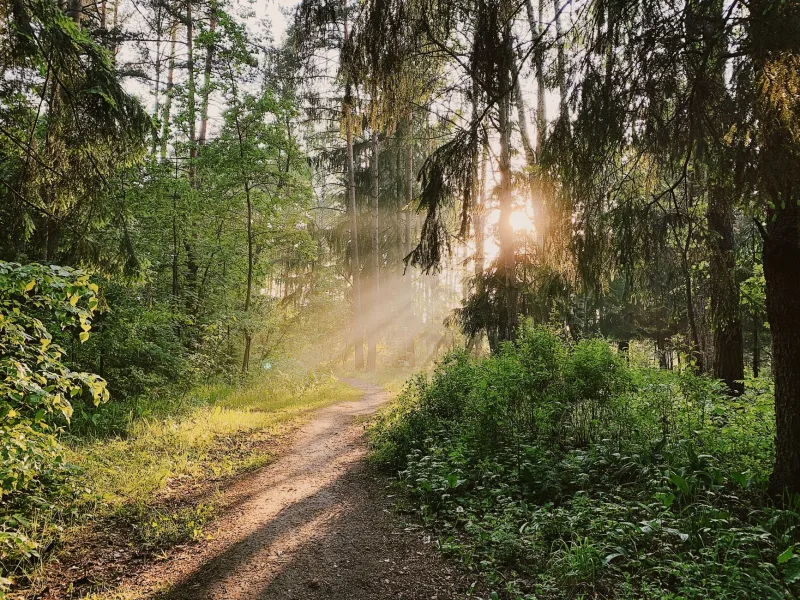
Shinrin-yoku does not require participants to hold Shinto beliefs. But understanding this cultural context helps explain why the practice emphasizes receptivity over activity. You are not hiking. You are not exercising. You are not ticking off miles on a fitness tracker. You are entering the forest as a guest, moving slowly enough to notice what is already there — the quality of light through a canopy, the texture of bark, the particular silence that exists only between the sounds of wind and water.
This distinction is where the wellness industry most often loses the thread.
How to Practice Shinrin-Yoku Authentically
For American readers, the following principles — drawn from the formal Shinrin-yoku guidelines developed in Japan — offer a more grounded entry point than most domestic retreats provide.
Leave your phone on silent and put it away. Shinrin-yoku is not compatible with documentation. The impulse to photograph the experience is, in itself, a form of distance from it.
Move slowly and without a fixed destination. Select a forested area — a national forest, a state park, or even a densely wooded urban green space — and walk at roughly half your normal pace. Allow yourself to stop frequently.
Engage all five senses deliberately. Notice what you hear beyond the obvious. Touch the bark of trees. Breathe through your nose and pay attention to how the air changes in different parts of the forest. Look upward as often as forward.
Spend a minimum of two hours. Brief nature walks carry some benefit, but the physiological effects documented in Japanese research were most pronounced in sessions of two hours or more. Forty-five minutes is a stroll. Shinrin-yoku is something else.
Go without a goal. This may be the most challenging instruction for American practitioners. The cultural instinct to optimize, to achieve, to return with something measurable — a number of steps, a calorie count, a photograph — works directly against the practice.
Shinrin-Yoku Takes Root in the United States
A small but growing number of American institutions are beginning to engage with Shinrin-yoku on its own terms. The Association of Nature and Forest Therapy (ANFT), headquartered in California, has trained certified guides in more than 50 countries and offers programming in several US national parks, including Muir Woods National Monument and Great Smoky Mountains National Park. Their methodology draws directly from the Japanese model, emphasizing guided sensory immersion rather than educational interpretation or physical exertion.
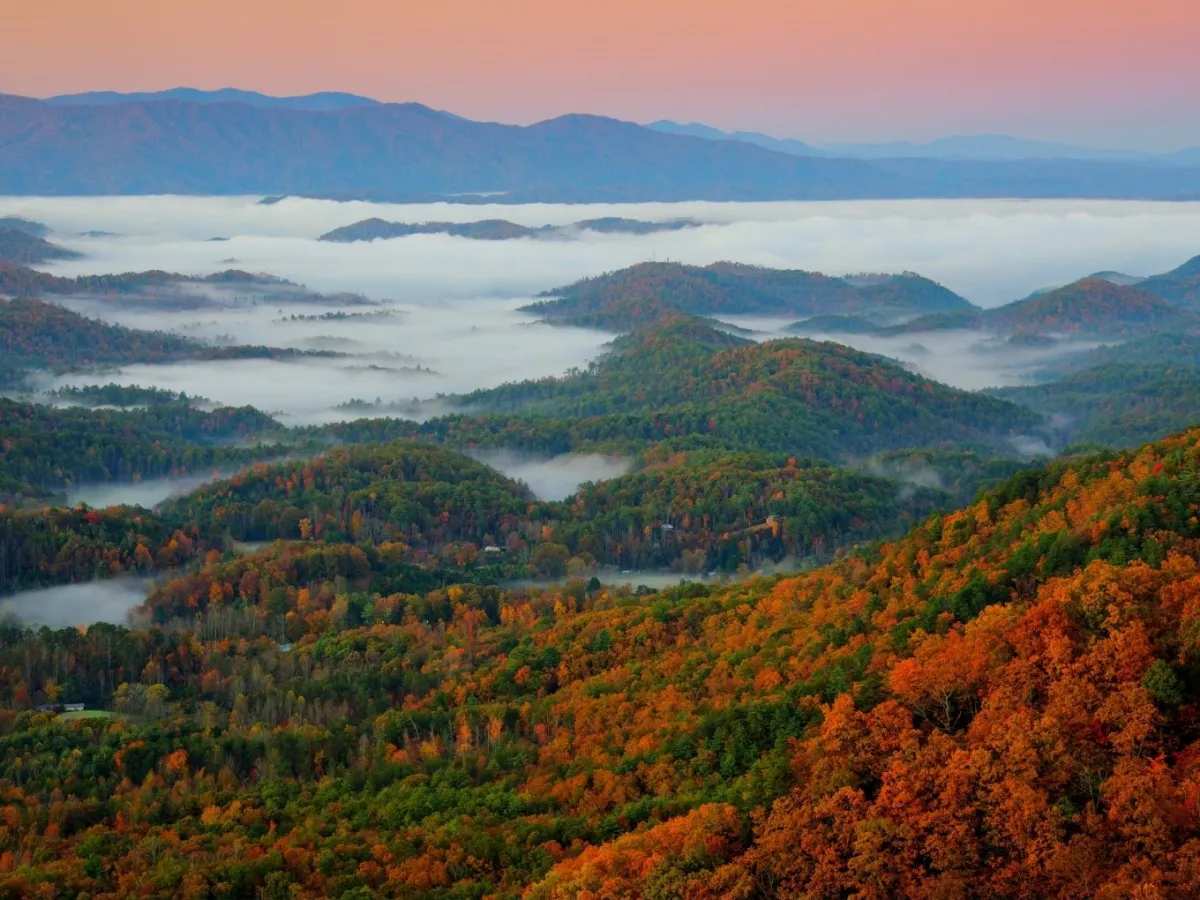 Photo: Great Smoky Mountains National Park, via www.travelthefoodforthesoul.com
 Photo: Muir Woods National Monument, via img.baysider.com
Several wellness retreats — among them the Miraval Arizona Resort and the Mohonk Mountain House in New York's Hudson Valley — have incorporated structured Shinrin-yoku sessions into their programming, with guides trained in the practice's formal principles. These are encouraging developments, though discerning participants would do well to ask whether the program follows a certified methodology or simply markets a forest walk under a Japanese name.
Why This Matters Beyond Wellness
At Honke Gohoubi, our interest in Shinrin-yoku extends beyond its health applications. It reflects something essential about the Japanese cultural orientation toward the natural world — a relationship characterized by humility, attentiveness, and a recognition that human well-being is not separable from the health of the environments we inhabit.
In a country where more than 80 percent of the population lives in urban areas, and where chronic stress has become something close to a cultural norm, the Japanese prescription for spending two hours walking slowly through the trees is neither exotic nor impractical. It is, if anything, overdue.
The forest has been there all along. Shinrin-yoku simply teaches us how to enter it properly.