A Charm in Your Pocket, a Prayer in Your Palm: The Ancient Japanese Tradition of Omamori Comes to America
They are small enough to fit in the palm of a hand. Wrapped in embroidered silk brocade, sealed with a cord, and stamped with the name of a shrine or temple, they look at first glance like decorative keychains. But to the millions of Japanese people who carry them daily — and to the growing number of Americans who have begun seeking them out — omamori are something considerably more significant than ornament.
These pocket-sized amulets represent one of Japan's most enduring spiritual traditions, a practice that has persisted for over a thousand years across both Shinto and Buddhist contexts. And in recent years, driven by travel, popular culture, and a broader American curiosity about Japanese spiritual life, omamori have found a passionate and often surprisingly reverent following far beyond the islands where they originated.
What an Omamori Actually Is
The word omamori (お守り) derives from the verb mamoru, meaning to protect or to guard. At its most fundamental level, an omamori is a physical vessel for a prayer or blessing — typically written on a piece of paper or wood and sealed within the fabric casing. That inner blessing, called go-shintai in Shinto contexts, is considered sacred. The outer pouch is not merely decorative; it is a protective layer around something spiritually charged.
Omamori are sold at the majority of Japan's approximately 80,000 Shinto shrines and many of its Buddhist temples, where priests or monks have ritually dedicated them. Each type carries a specific intention:
- Kaiun (開運): general good fortune
- Kenko (健康): health and physical well-being
- Enmusubi (縁結び): love and romantic connection
- Gakugyō (学業): academic success
- Kōtsū Anzen (交通安全): traffic and travel safety
- Yaku-yoke (厄除け): protection against misfortune
The range is extensive, and major shrines like Meiji Jingu in Tokyo or Fushimi Inari in Kyoto offer dozens of varieties, each visually distinct and spiritually specific.
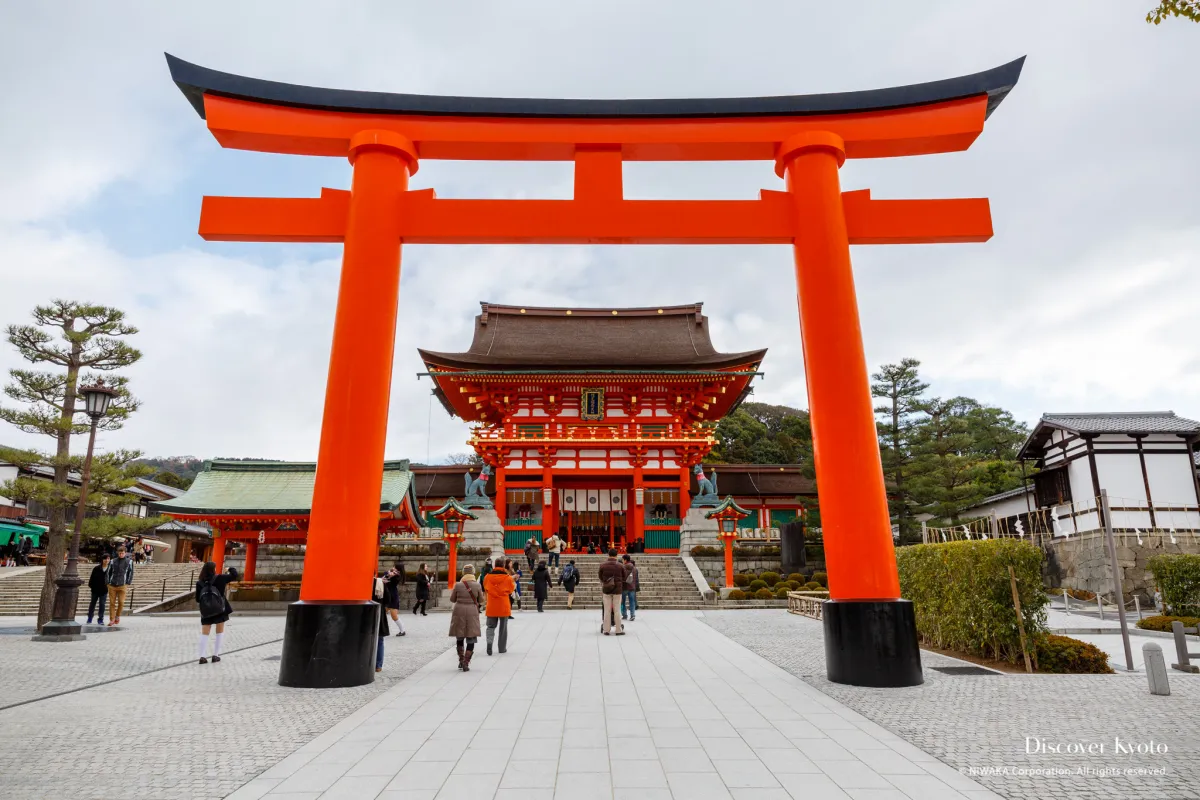 Photo: Fushimi Inari, via dskyoto.s3.amazonaws.com
 Photo: Meiji Jingu, via files.idyllic.app
A Tradition Rooted in Two Faiths
The practice of carrying protective amulets in Japan predates written historical records, but the formalized omamori tradition as it is recognized today developed largely during the Heian period (794–1185 CE), as both Shinto and Buddhist institutions became more organized and influential in daily Japanese life.
In Shinto belief, omamori serve as a conduit to the kami — the divine spirits that inhabit natural phenomena, ancestors, and sacred places. Receiving an omamori from a shrine is understood as entering into a relationship with that shrine's particular kami, who will offer guidance and protection over the specified domain of life.
Buddhist temples approach the tradition through a related but distinct theological lens, with amulets often associated with specific bodhisattvas or Buddha figures known for particular forms of compassion or protection. Regardless of the theological framework, what both traditions share is the understanding that an omamori is not a magical object in the Western fantasy sense. It is not believed to mechanically guarantee outcomes. Rather, it functions as a focal point for spiritual intention — a daily, physical reminder of the prayer one has offered and the protection one has sought.
The Rules That Matter
For American enthusiasts approaching omamori for the first time, understanding the associated customs is essential — both out of respect for the tradition and to engage with it authentically.
Do not open it. This is perhaps the most important rule. The inner blessing of an omamori is considered sacred, and breaking the seal is believed to release and nullify its protective power. The charm should remain sealed for the duration of its use.
Carry it close. Omamori are meant to be kept near the body or in spaces that reflect their purpose. A traffic safety charm belongs in a vehicle. A health charm is best kept on one's person. A love charm might rest in a purse or jacket pocket. They are not primarily meant for display, though some people do keep them in visible places as a form of daily reminder.
Observe the one-year tradition. Most omamori are considered effective for approximately one year. After that period, they should be returned to a shrine or temple for respectful ritual disposal — a ceremony called o焚き上げ (otakiage), in which the charms are burned in a purifying fire. Keeping an omamori indefinitely or simply discarding it in household trash is considered disrespectful to the spiritual intention it carries.
Do not give away a charm meant for yourself. Omamori are generally selected for a specific person and purpose. Gifting one you purchased for yourself is considered inappropriate, though purchasing one specifically as a gift is a perfectly accepted and common practice in Japan.
Why Americans Are Drawn to Omamori
The American interest in omamori has arrived through several distinct channels. Anime and manga have introduced millions of younger viewers to the visual and narrative presence of these charms — characters in beloved series frequently carry them, and the cultural context is often explained with surprising care. For many fans, omamori represent their first tangible point of connection to Japanese spiritual culture.
Beyond pop culture, a broader American interest in mindfulness, intentional living, and non-Western spiritual practices has created fertile ground for traditions like this one. In a cultural moment when many Americans are searching for meaningful rituals to anchor daily life, the omamori offers something specific and grounded: a physical object that represents a deliberate spiritual choice, carried as a quiet daily commitment.
Collectors represent another significant group. Omamori vary beautifully by region, season, and shrine, making them compelling objects for those who travel through Japan or study its regional shrine traditions. Some collectors maintain careful records of where each charm was obtained and what occasion prompted the purchase.
How to Obtain an Omamori Authentically
For American readers, the most meaningful way to acquire an omamori remains visiting Japan directly. Purchasing a charm at the shrine or temple from which it originates — selecting it in person, in the presence of the sacred space it represents — honors the full spirit of the tradition. Major pilgrimage sites such as Ise Jingu, Sensoji Temple in Asakusa, or Dazaifu Tenmangu in Fukuoka each offer charms with distinct regional and spiritual character.
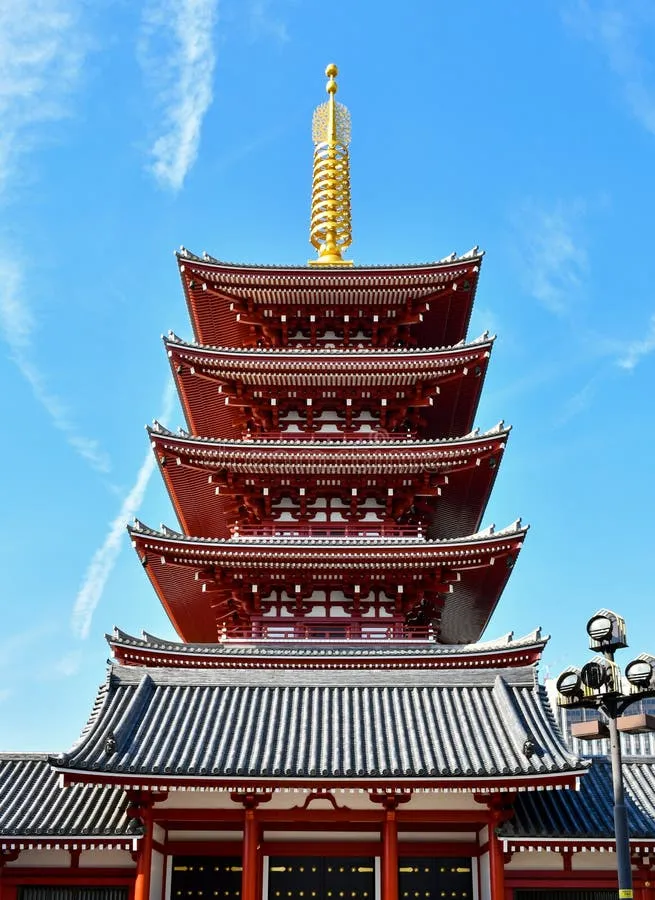 Photo: Sensoji Temple, via thumbs.dreamstime.com
For those unable to travel, a growing number of reputable importers and cultural retailers in the United States offer authentic omamori sourced directly from Japanese shrines and temples. When purchasing through these channels, it is worth verifying that the retailer discloses the originating shrine, as provenance is an important part of the charm's integrity. Online marketplaces can be inconsistent in this regard; dedicated Japanese cultural import shops tend to be more reliable.
Some Japanese-American cultural organizations and Buddhist temples in cities like Los Angeles, San Francisco, and Honolulu also offer omamori, particularly around the New Year — a period when shrine visits and charm purchases are traditional in Japan.
A Small Object, a Lasting Tradition
What makes omamori so enduring — across centuries, across cultures, and now across oceans — is perhaps their elegant simplicity. They ask very little of the person who carries them: only attention, intention, and a measure of respect for the tradition they represent. In return, they offer something quietly powerful: the sense of being accompanied, of having placed a small, sincere prayer into the world and chosen to carry it forward.
At Honke Gohoubi, we see in omamori exactly the kind of living tradition that deserves careful attention — not as a curiosity or a collectible, but as a practice with depth, meaning, and an ongoing capacity to connect people across the boundaries of culture and belief.