What You Bring Back Matters: The Japanese Custom of Omiyage and the Lost American Art of Thoughtful Giving
Most Americans have experienced the airport souvenir shop in its full, fluorescent glory — a last-minute scramble for keychains, refrigerator magnets, and cellophane bags of regional candy that no one particularly wanted but everyone politely accepted. It is a ritual of sorts, but a hollow one. Japan has a different approach entirely, and it has been refined over centuries.
The practice is called omiyage (お土産), and while the word is often translated simply as "souvenir," that translation does it a disservice. Omiyage is not a trinket. It is a gesture — a carefully chosen, regionally specific gift brought back from one's travels and presented, with genuine intention, to the people who remained behind while you were away.
The Cultural Architecture Behind the Gift
To understand omiyage, one must first understand the Japanese concept of ma — the meaningful space between things — and the broader cultural emphasis on reciprocity and group harmony, or wa. Japanese society places significant value on the relationships that bind a community together, whether that community is a family, a neighborhood, or an office. Travel, by its nature, temporarily removes a person from that web of relationships. Omiyage is the act of re-entering it gracefully.
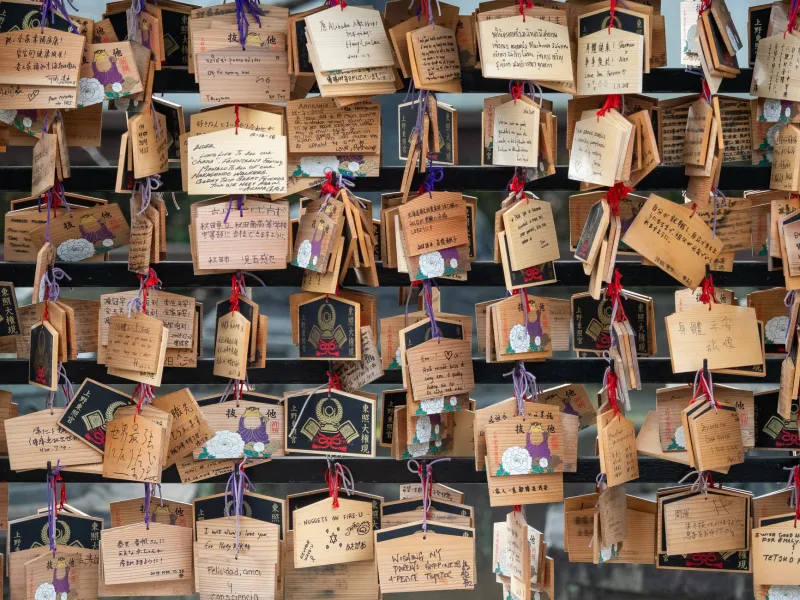
The custom has roots stretching back to the Edo period (1603–1868), when pilgrimages to sacred sites such as Ise Shrine were among the few socially sanctioned reasons for ordinary people to travel long distances. Pilgrims would bring back fuda — small talismans from the shrines — as gifts for those who could not make the journey themselves. Over time, as travel became more accessible and secular, the practice evolved. The talisman became regional food, local confections, or handcrafted goods. The spiritual obligation became a social one. But the underlying sentiment — I thought of you while I was somewhere you were not — remained constant.
 Photo: Ise Shrine, via www.ramnicuvalceaweek.ro
The Rules Are Not Unspoken — They Are Simply Understood
For the uninitiated, the etiquette of omiyage can seem surprisingly structured. There are expectations, though they are rarely stated aloud, because in Japan, they do not need to be.
First, the gift should be local and specific. A box of chocolates purchased at a Tokyo train station does not carry the same weight as yatsuhashi from Kyoto or shiroi koibito from Hokkaido. The regional identity of the gift is part of its meaning — it signals that you were paying attention to where you were, that the place itself was worth remembering.
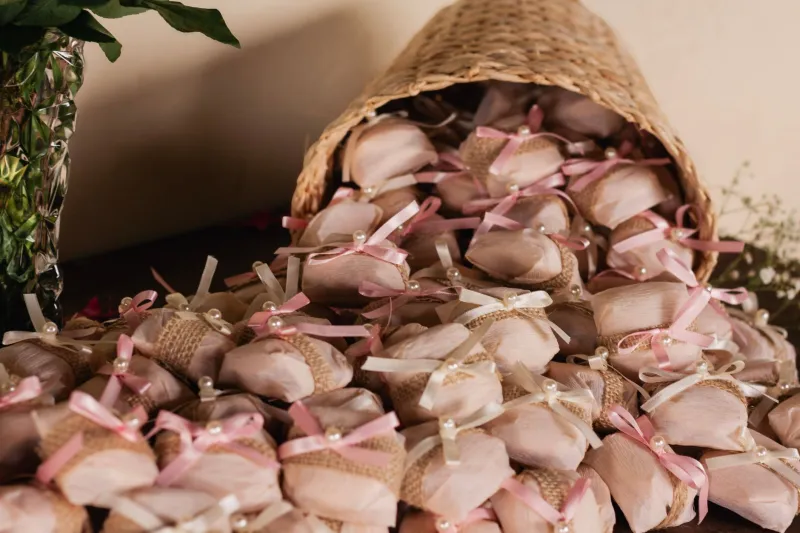
Second, omiyage is typically given in quantities sufficient for the whole group. In a workplace setting, this often means individually wrapped items that can be placed on a shared desk or common area so that no one is left out. The act is public and inclusive by design.
Third, the presentation matters. Gifts are often wrapped neatly and presented with both hands, accompanied by a brief, modest comment about the trip — not a boast, but an acknowledgment. The recipient, in turn, typically accepts with gratitude and does not immediately tear into the package in front of the giver.
Finally, the gift is almost never expensive. Omiyage is not about financial value. A beautifully packaged box of regional rice crackers costing a few dollars carries far more cultural weight than an extravagant purchase. The currency here is attention, not money.
Where American Souvenir Culture Falls Short
In the United States, gift-giving after travel tends to be either obligatory or entirely absent. Parents might bring their children something from a work trip. A friend might grab a bottle of local hot sauce for a neighbor who asked. But there is no widespread cultural framework that makes the act feel meaningful — no shared understanding of what the gesture is supposed to communicate.
American souvenir culture is largely transactional and self-directed. We buy things that remind us of where we were, not things that allow others to participate in the experience. The refrigerator magnet is a memory aid for the traveler, not a gift for the community.
This is not a criticism of American generosity — Americans give enormously, both in charitable terms and in personal relationships. But the specific ritual of bringing back a piece of one's journey for others reflects a particular kind of social intelligence that, once practiced, tends to deepen the bonds it touches.
What Adopting Omiyage Could Look Like in American Life
The good news is that this custom requires no special training, no significant expense, and no dramatic shift in lifestyle. It requires only a small reorientation of attention.
Before you travel, take a moment to consider the people in your life — your coworkers, your close friends, your family members. Think about what they enjoy, and make a mental note to look for something that speaks to the place you are visiting.
While you are there, visit a local market, a small bakery, a regional specialty shop, or a farmers' market. Look for things that are genuinely of that place — a jar of local honey, a bag of coffee from a regional roaster, a tin of biscuits from a beloved local institution. Avoid airport shops where possible. The effort of finding something authentic is part of the gift.
When you return, do not drop the items on a desk without context. Take a moment to say, simply: I was in Charleston and thought of you — these are the benne wafers everyone there seems to love. That sentence alone transforms the exchange.
For workplace settings, individually wrapped or portioned items work best — a box of local pralines, a sleeve of artisan crackers, a sampler of regional preserves. The goal, as in Japan, is that no one feels overlooked.
A Tradition Worth Borrowing
At Honke Gohoubi, we are drawn to the Japanese traditions that carry within them a philosophy worth examining — customs that encode values rather than merely habits. Omiyage is one of those traditions. It is, at its core, a practice of paying attention: to the places we visit, to the people we return to, and to the invisible threads of care that hold communities together.
In a culture increasingly shaped by digital communication and the quiet erosion of in-person ritual, the simple act of bringing something back — something real, something local, something chosen with another person in mind — is a small but meaningful way to say: I was away, but I did not forget you.
That sentiment, it turns out, needs no translation.