More Than Money in an Envelope: The Japanese Tradition of Otoshidama and What It Quietly Teaches Children About Honor, Gratitude, and the Weight of a Gift
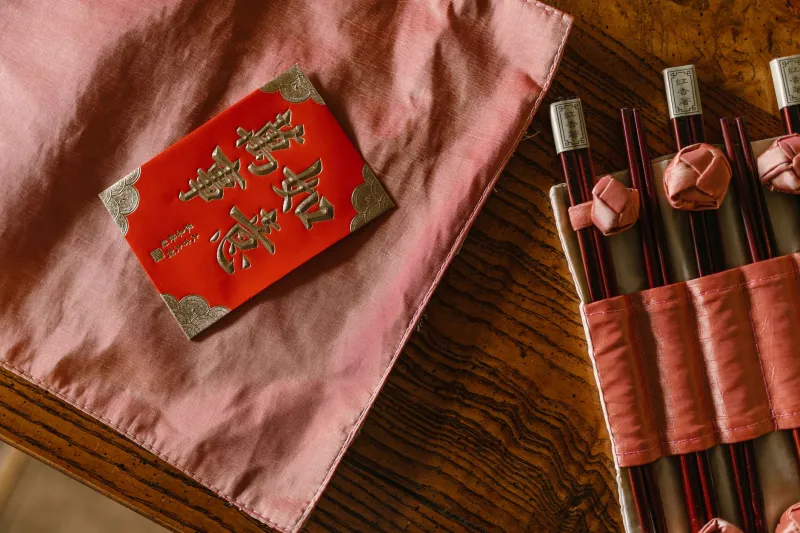
Somewhere in the weeks following New Year's Day, a child in Osaka carefully arranges a row of small, ornately printed envelopes on a low table. Each one arrived from a different adult — a grandparent, an aunt, a family friend of long standing — and each contains a sum of money chosen not arbitrarily, but according to the age of the child, the closeness of the relationship, and an unspoken but deeply understood code of social propriety. The child does not tear them open with abandon. There is a way to receive these envelopes, just as there is a way to give them.
This is otoshidama. And while it may look, from a distance, like Japan's version of slipping a kid a twenty, it is something considerably more layered than that.
A Tradition Rooted in the Sacred
The origins of otoshidama stretch back centuries, into a period when the gifts exchanged at New Year were not envelopes of currency at all, but offerings of rice — small, round mochi cakes believed to carry the spirit of Toshigami, the deity of the incoming year. To receive such an offering was to receive a kind of blessing, a portion of divine vitality meant to sustain the recipient through the months ahead.
As Japan modernized and currency replaced rice as the medium of everyday exchange, the symbolic content of the gift shifted in form but not in essence. What remained was the understanding that the New Year gift carried something beyond its material value — that it was, in some sense, a transfer of goodwill with spiritual undertones. The decorated envelope, known as a pochibukuro or noshidama, became the vessel for this transfer: small, precise, often bearing traditional motifs of pine, bamboo, plum blossom, or crane.
The shift to paper money also introduced a new layer of etiquette. Bills placed inside an otoshidama envelope are expected to be new and uncreased. Worn currency, the kind pulled from a wallet without ceremony, is considered inappropriate — not merely impolite, but subtly disrespectful. The freshness of the bill signals that the giver has prepared in advance, has visited a bank, has thought ahead. It is effort made visible.
The Arithmetic of Respect
In American gift-giving culture, the amount of money placed inside a birthday card or graduation envelope tends to reflect little beyond the giver's budget and general affection. Japan's otoshidama tradition operates according to a more structured logic.
The sum given is calibrated to the recipient's age: younger children receive smaller amounts, with the figures increasing as children grow older and approach adulthood. A toddler might receive the equivalent of a few dollars; a high school student approaching college age might receive the equivalent of fifty dollars or more. This scaling is not about being stingy with the young — it reflects a cultural understanding that the gift is proportional to the recipient's capacity to understand and use it meaningfully. Giving a six-year-old a sum appropriate for a sixteen-year-old would not be generosity. It would be a failure of discernment.
Equally significant is who gives and who receives. Otoshidama flows downward through generational and social hierarchies: adults give to children, elders give to younger relatives. Adults do not typically exchange otoshidama with one another. This directionality encodes something important — the gift is not reciprocal in the immediate sense, and it is not meant to be. The child who receives cannot yet give back in kind. What they can do is receive with proper gratitude, acknowledge the giver with sincerity, and, in time, grow into the role of giver themselves.
What Children Learn That No Allowance Chart Can Teach
Perhaps the most striking contrast between otoshidama and the dominant American approach to children and money is what each system implicitly teaches about the relationship between currency and human connection.
In many American households, money given to children is framed primarily in terms of financial literacy: saving percentages, spending decisions, the mechanics of a piggy bank or a basic savings account. These are not unworthy lessons. But they are lessons about money as a tool, largely abstracted from the social fabric in which money actually moves.
Otoshidama teaches something different first. Before a child learns what to do with the money inside the envelope, they learn something about the envelope itself — about the person who chose it, filled it, sealed it, and handed it over with two hands and a small bow. They learn that this exchange is not a transaction but a ritual, and that rituals carry obligations. The child who receives an otoshidama envelope is expected to thank the giver directly, often in writing, and to remember who gave what — not to calculate debts, but to understand that they exist within a web of relationships that have histories and will have futures.
In many Japanese families, parents help children manage the accumulated otoshidama funds, guiding them toward savings while allowing some portion for immediate enjoyment. The envelope itself is often kept, even after the money has been spent. It is a record of care received.
Otoshidama in America: Quiet Persistence Across Generations
For Japanese-American families, particularly those in communities with strong ties to Japan — in California's Bay Area, in Los Angeles, in Hawaii, in the Pacific Northwest — otoshidama has proven to be one of the more resilient cultural practices across generations. It requires no special location, no elaborate preparation beyond a trip to the bank for fresh bills and a visit to a Japanese stationery store or an online shop for proper envelopes. It is, in that sense, portable.
What varies, naturally, is the degree of formality. In some households, the full etiquette of the tradition is maintained: envelopes are presented at the New Year's gathering, children receive them in order of age, and the proper expressions of gratitude are observed. In others, the practice has been adapted — the envelopes appear without the accompanying ritual structure, or the custom is explained to children of mixed heritage who may be encountering it for the first time.
There is also a growing curiosity among non-Japanese Americans who have encountered the tradition through Japanese friends, partners, or neighbors. The appeal is not difficult to understand. In a culture that often struggles to assign meaning to monetary gifts — where cash in a card can feel impersonal, even lazy — the otoshidama tradition offers a model in which the money is the least important part of the exchange.
The Envelope as Teacher
What makes otoshidama worth understanding, for those who did not grow up with it, is not its surface mechanics but its underlying philosophy. The tradition assumes that giving is an act requiring preparation, that the form of a gift communicates as much as its content, and that children are capable of absorbing complex social lessons when those lessons are embedded in repeated, meaningful ritual.
In the broader framework of Japanese cultural practice — where the presentation of a gift, the wrapping of a purchase, the handing over of a business card all carry deliberate significance — otoshidama is not an anomaly. It is an expression of a consistent worldview: that how you do something matters as much as what you do, and that attention paid to the small gestures of daily and seasonal life is itself a form of honor.
For American families seeking to instill in children a richer understanding of money, generosity, and the obligations that come with belonging to a community of people who care for one another, the otoshidama tradition offers more than an interesting cultural footnote. It offers a framework — one built not on financial instruction alone, but on the older, quieter lesson that every gift, when given with care, is also a kind of promise.