Broken and More Beautiful: What the Japanese Craft of Kintsugi Teaches Us About Imperfection, Resilience, and the Things We Throw Away
Somewhere in a landfill outside of a major American city, there is a perfectly good ceramic mug. Its handle snapped clean off — an accident, a moment of carelessness — and its owner, rather than attempting a repair, dropped it into the recycling bin without a second thought. In Japan, that same mug might have become something extraordinary.
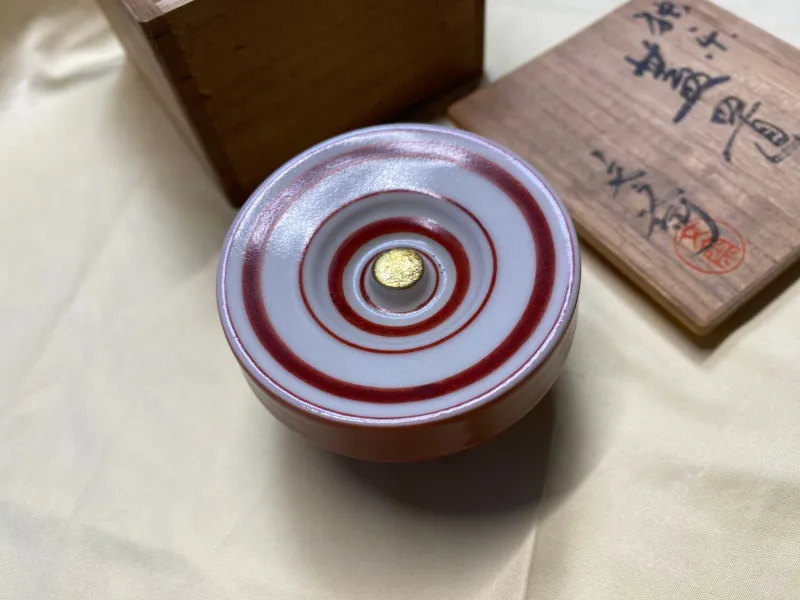
Kintsugi, which translates loosely as "golden joinery" or "golden repair," is a Japanese craft tradition dating back to the fifteenth century. The practice involves mending broken ceramics not by concealing the damage, but by emphasizing it — filling fractures with lacquer mixed with powdered gold, silver, or platinum. The result is an object that wears its history openly, its scars transformed into luminous veins of precious metal. The broken piece does not merely survive. It becomes, in many ways, more beautiful than it was before.
The Origin of an Accident Turned Art Form
Most historians trace Kintsugi's origins to the reign of the Ashikaga shogunate in late fifteenth-century Japan. According to widely cited accounts, the shogun Ashikaga Yoshimasa sent a damaged Chinese tea bowl abroad for repair. When it returned held together by unsightly metal staples, Japanese craftsmen sought a more aesthetically worthy solution. What they developed was not simply a repair technique — it was an entirely new way of understanding the relationship between objects, time, and beauty.
The philosophy underlying Kintsugi draws deeply from two influential Japanese aesthetic concepts: wabi, which finds beauty in simplicity and impermanence, and sabi, which appreciates the elegance that age and wear bring to things. Together, these ideas form the foundation of wabi-sabi, a worldview that directly contradicts the Western preference for newness, symmetry, and flawless surfaces. In the Kintsugi tradition, an object's damage is not a defect to be hidden — it is a chapter in its biography, worthy of commemoration.
Why American Culture Struggles with This Idea
The United States, by contrast, has built much of its modern economy on the principle of planned obsolescence. Manufacturers design products to be replaced, not repaired. Retailers thrive on the assumption that when something breaks, the natural response is to purchase a newer, shinier version. According to the Environmental Protection Agency, Americans generate more than 292 million tons of municipal solid waste annually — a figure that reflects not merely necessity, but a cultural reflex.
This is not a moral failing unique to any individual. It is, rather, the logical outcome of a consumer environment that has systematically devalued repair. The neighborhood cobbler, the watch repairman, the seamstress who could remake a worn coat — these figures have largely disappeared from the American landscape, replaced by fast fashion, disposable electronics, and the quiet understanding that fixing things costs more in time and money than buying new ones.
Kintsugi does not simply challenge that economy. It challenges the underlying belief system that makes it possible.
A Philosophy Finding New Audiences in Wellness and Therapy
In recent years, Kintsugi has migrated far beyond the ceramics studio. Therapists and counselors in the United States have begun drawing on its central metaphor to help patients reframe personal trauma, grief, and failure. Rather than striving to return to an idealized pre-damaged state, clients are encouraged to recognize that their wounds are not erasable — and that integration, rather than erasure, is the more honest and ultimately more powerful path forward.
The concept has appeared in mindfulness curricula, grief support programs, and even corporate resilience workshops. Dr. Tomás Navarro, a psychologist who has written on the subject, has described Kintsugi as a model for what he calls "emotional repair" — the understanding that acknowledging one's fractures openly is not a sign of weakness but of hard-won wisdom.
The sustainability movement has similarly embraced the spirit of Kintsugi, if not always the name. The growing "right to repair" advocacy in the United States — which pushes back against manufacturer restrictions on fixing electronics and appliances — echoes the same core conviction: that an object's useful life should not end at its first breaking point. Organizations promoting repair cafes, community mending circles, and zero-waste lifestyles are, in their own way, practicing a secular form of golden joinery.
How to Bring Kintsugi Into Your Own Life
For American readers curious about engaging with Kintsugi directly, the entry point is more accessible than it might appear.
Start with a broken object you love. Kintsugi kits — containing the necessary urushi lacquer, metallic powder, and application tools — are now available through specialty retailers and online marketplaces. Several American ceramics studios offer beginner workshops, and instructors can be found in cities including New York, Los Angeles, Chicago, and Seattle. The process requires patience rather than expert skill, and the imperfect results are, by the philosophy's own logic, entirely appropriate.
Apply the metaphor to relationships. Kintsugi offers a compelling framework for thinking about friendships, partnerships, and family bonds that have been strained or fractured. Rather than abandoning a relationship because it has been damaged, consider what honest acknowledgment of that damage — and a deliberate effort to repair it — might yield. The gold in human connection is often found precisely in the conversations that are most difficult to have.
Reconsider what you discard. Before replacing a broken household item, ask whether it might be repaired — not necessarily with gold lacquer, but with the same spirit of intentional care. A local cobbler, tailor, or furniture restorer may be closer than you think. The act of repair, even a modest one, is a small but meaningful act of resistance against the throwaway economy.
Embrace your own imperfections as history. Perhaps the most profound application of Kintsugi requires no tools at all. It asks only that you shift your relationship to your own past — to view the moments that broke you not as evidence of inadequacy, but as the lines along which something richer and more resilient has been allowed to form.
A Tradition That Was Never Only About Pottery
Kintsugi has endured for more than five centuries not because Japanese artisans lacked the ability to hide cracks, but because they recognized something that consumer culture actively suppresses: the idea that damage, honestly acknowledged and carefully tended, can become a source of meaning rather than shame.
In a country that spends billions of dollars each year on self-improvement products promising to erase the evidence of time, stress, and experience, the quiet wisdom of Kintsugi arrives as something of a provocation. It does not ask us to celebrate suffering. It asks us to stop pretending it never happened — and to consider that the gold was always there, waiting for the right kind of break to let it through.