Soba at Midnight, Gold Envelopes at Dawn: Inside Japan's Oshogatsu and What America's New Year Celebrations Are Missing
Soba at Midnight, Gold Envelopes at Dawn: Inside Japan's Oshogatsu and What America's New Year Celebrations Are Missing
Every year, as December 31st approaches, millions of Americans engage in a remarkably similar ritual: they purchase a bottle of something sparkling, make tentative plans to stay awake until midnight, watch a glowing ball descend over Times Square, and wake up on January 1st with a vague sense that something meaningful has occurred. By January 2nd, most of them are back to ordinary life, the holiday already fading.
In Japan, that timeline would be nearly unrecognizable. The arrival of the new year — Oshogatsu, as the season is called — is the country's most significant holiday, and it unfolds not as a single night of noise but as a multi-day sequence of rituals so carefully observed that their details have been passed down largely intact across centuries. To understand Oshogatsu is to understand something essential about how a culture can choose to mark time with intention rather than spectacle.
The Days Before: Cleaning, Cooking, and Letting Go
Oshogatsu does not arrive without preparation. In the weeks preceding January 1st, Japanese households undertake osoji — a thorough year-end cleaning that goes well beyond the ordinary. Every surface is addressed, every corner examined. The purpose is not merely hygienic. Osoji is understood as a ritual clearing: the physical act of removing accumulated dust and disorder is believed to make space for good fortune in the coming year. It is, in spirit, closer to a ceremony than a chore.
Simultaneously, families prepare osechi ryori — an elaborate assortment of traditional foods, each carrying symbolic meaning, packed into lacquered boxes called jubako. Black soybeans (kuromame) represent good health and diligence. Herring roe (kazunoko) symbolizes fertility and a prosperous family line. Sweet rolled omelet (datemaki) is associated with scholarship and learning. Every element has been selected with deliberate care, and the preparation of osechi — once a days-long family endeavor — remains a meaningful act even in households that now supplement homemade dishes with prepared versions from department stores.
New Year's Eve: The Quiet Power of Toshikoshi Soba
While Americans tend to treat December 31st as an occasion for escalating celebration, the Japanese New Year's Eve carries a more contemplative quality. Central to the evening is the consumption of toshikoshi soba — long buckwheat noodles eaten specifically on this night. The name translates roughly as "year-crossing noodles," and the symbolism is straightforward: the length of the noodles represents longevity, while their ease of cutting signifies a clean severance from the difficulties of the past year.
The practice is ancient, with written records placing it as far back as the Edo period, yet it persists across generational lines with remarkable consistency. Eating toshikoshi soba is not considered a grand gesture — it is simply what one does on New Year's Eve, as natural and expected as the countdown itself. There is something quietly powerful about a tradition whose meaning can be absorbed in a single bowl of noodles.
At midnight on December 31st, Buddhist temples throughout Japan ring their bells 108 times in a ceremony called joya no kane. Each toll is said to correspond to one of the 108 earthly desires recognized in Buddhist teaching, and the ringing is understood to purify the listener, releasing accumulated burdens before the year turns. It is, to put it plainly, a more spiritually considered send-off than a champagne cork.
The First Days of January: Hatsumode and the Shrine Visit
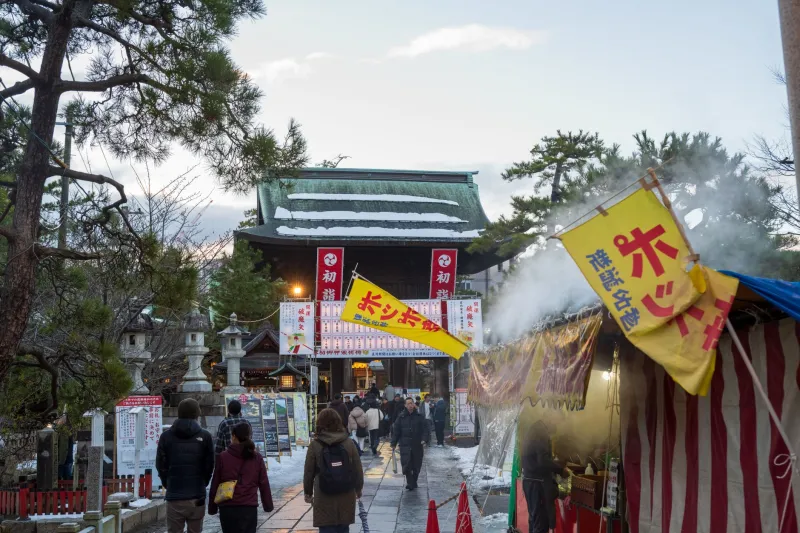
If toshikoshi soba marks the closing of one year, hatsumode marks the opening of the next. The first shrine or temple visit of the new year — typically occurring on January 1st, 2nd, or 3rd — is among the most widely observed Oshogatsu customs, drawing tens of millions of participants across Japan each season. At the shrine, visitors ring a bell, toss a coin into the offering box, bow twice, clap twice, and bow once more — a sequence that is both respectful and deeply habitual for those who have grown up practicing it.
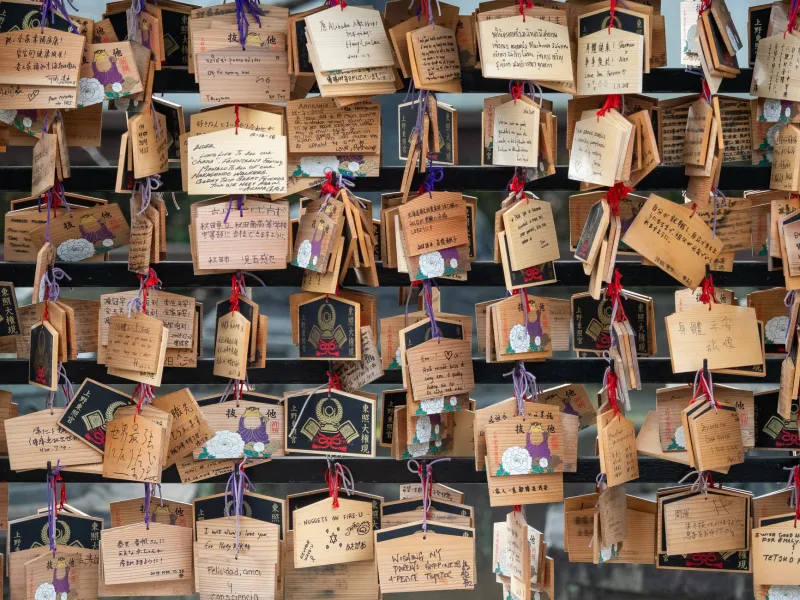
At these visits, many people purchase omikuji — strips of paper bearing fortune predictions ranging from great blessing to great misfortune — and ema, small wooden plaques on which wishes and prayers are written and left at the shrine. They may also receive or purchase hamaya, ceremonial arrows believed to ward off evil spirits for the coming year. The atmosphere at major shrines during hatsumode is simultaneously festive and reverent: vendors sell warm food and amazake, crowds press forward in elaborate winter dress, and the sense of collective intention is palpable.
Otoshidama and Nengajo: Gifts and Greetings That Carry Weight
Oshogatsu also brings two beloved customs that involve the deliberate act of reaching out to others. Otoshidama are small envelopes of money — often decorated with festive designs — given by adults to children in the family as a new year's gift. Unlike a generic holiday present, otoshidama is understood as a specific blessing for the child's coming year, and the careful presentation of the envelope is as meaningful as its contents. Children often save these envelopes, sometimes for years, as tangible memories of the adults who gave them.
Nengajo, meanwhile, are new year's greeting cards sent through the post — a tradition that, at its peak, saw Japanese households exchanging hundreds of cards per season. Nengajo feature the zodiac animal of the incoming year and are designed to arrive precisely on January 1st, a logistical feat managed by Japan Post through a dedicated holding system. In an era of instant digital messaging, the persistence of nengajo speaks to a cultural preference for correspondence that requires effort — and is therefore more meaningful upon receipt.
Japanese-American Families Keeping the Flame
For Japanese-American families across California, Hawaii, Washington, and beyond, Oshogatsu has served as an anchor of cultural identity across generations. Community organizations such as the Japanese American Citizens League have long supported new year's celebrations that preserve hatsumode visits, osechi preparation, and otoshidama exchanges. In cities with significant Japanese-American populations — Los Angeles, San Francisco, Seattle, Honolulu — the new year season often includes public mochi-pounding ceremonies (mochitsuki), temple gatherings, and cultural center events that welcome participants of all backgrounds.
For third- and fourth-generation Japanese Americans, these traditions sometimes arrive in adapted form — a simplified osechi box, a temple visit that doubles as a family reunion, otoshidama envelopes given with humor and affection. The specific details may shift, but the underlying intention — to mark the new year with deliberate ritual and communal connection — remains intact.
What Any American Household Can Take Away
Oshogatsu is not a tradition that can or should be wholesale adopted by those outside its cultural context. But its underlying principles are neither proprietary nor inaccessible. Any household, regardless of background, might consider a few meaningful borrowings.
Conduct a year-end clearing. Before December 31st, dedicate time to a thorough cleaning of your living space — not as a chore, but as a conscious act of preparation. Consider what you are releasing alongside the dust.
Eat something symbolic on New Year's Eve. Prepare a simple dish whose ingredients carry meaning for your family, and explain that meaning at the table. The specifics matter less than the intention.
Write something by hand. Send a card — a real, physical card — to someone you value but rarely contact. The effort of writing and mailing it is part of the message.
Make the first day purposeful. Rather than treating January 1st as a recovery day, mark it with a deliberate activity: a walk to a place that holds significance, a shared meal, a moment of quiet reflection before the ordinary schedule resumes.
Oshogatsu endures because it understands something that a single night of celebration cannot provide: that a new beginning is not simply announced. It is prepared for, marked with care, and shared with the people who matter most. The ball drops in Times Square, and then it is over. In Japan, the new year has only just begun.