One Knife, One Life: What Japan's Shokunin Masters Can Teach a Burned-Out America About the Power of Doing Less
One Knife, One Life: What Japan's Shokunin Masters Can Teach a Burned-Out America About the Power of Doing Less
There is a sushi chef in Tokyo who has spent over fifty years making rice. Not cooking fish. Not plating courses. Making rice — adjusting the vinegar by fractions, sensing the humidity in the air before he seasons a single grain, pressing each portion with a hand pressure so consistent it has become, over decades, a kind of muscle memory indistinguishable from instinct. His name is largely unknown outside Japan. By any conventional American metric of success, his career looks impossibly narrow. By the standards of Japanese craft culture, he is something close to a living monument.
He is a shokunin.
And in an era when LinkedIn profiles celebrate professionals who are simultaneously founders, consultants, podcasters, and coaches, the shokunin stands as one of the most quietly defiant figures in the world.
What the Word Actually Means
The term shokunin (職人) is frequently translated as "craftsman" or "artisan," but those English approximations miss something essential. The word carries within it a sense of total vocational surrender — not merely skill, but a life organized entirely around the pursuit of a single excellence. A shokunin does not have a craft. A shokunin is the craft.
The Japanese culinary philosopher Shizuo Tsuji once wrote that the shokunin spirit requires a practitioner to place the work above personal comfort, social recognition, and even financial reward. The discipline is not a means to an end. It is the end itself. This is a philosophical position that sits in almost direct opposition to the American professional ideal, which tends to treat expertise as a ladder rung rather than a destination — something to leverage, monetize, and eventually move beyond.
In Japan, moving beyond is not the point. Going deeper is.
The Traditions That Carry This Philosophy
Shokunin culture manifests across an extraordinary range of Japanese crafts, each with its own centuries-old lineage and its own vocabulary of devotion.
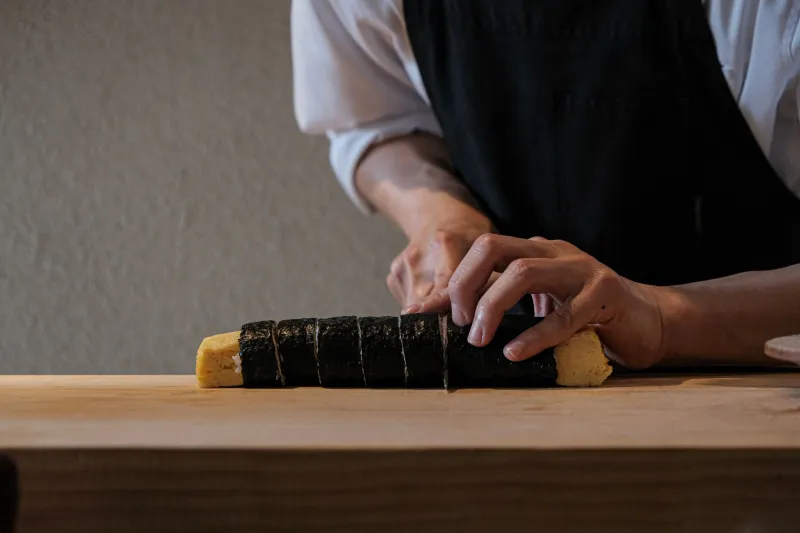
In the world of sushi, apprentices in traditional establishments may spend two or three years doing nothing but washing rice and observing before they are permitted to handle fish. This is not hazing. It is the deliberate cultivation of patience, attention, and foundational understanding — the belief that mastery cannot be rushed without being permanently diminished. The late Jiro Ono, whose Sukiyabashi Jiro restaurant became internationally known, famously described his work not as a job but as a calling he was still in the process of answering at the age of ninety.
In sword-making, or katana forging, a single blade may require weeks of labor from a swordsmith who has trained for a decade before touching steel in a professional capacity. The Japanese sword is not merely a weapon; it is considered a spiritual object, and the process of its creation is treated with corresponding seriousness. Government-designated Living National Treasures in this field are recognized not for prolific output but for the depth of knowledge they carry and transmit.
Tatami weaving, a craft that predates the modern era by centuries, involves the precise layering and stitching of rush grass into the distinctive floor mats that define traditional Japanese interior space. Master tatami craftspeople can assess the quality of rush by touch alone, reading moisture content and fiber density through their fingertips the way a musician reads a score. There are fewer than a few thousand certified tatami craftspeople remaining in Japan today — a number that speaks both to the difficulty of the path and to how seriously those who walk it take their commitment.
Why This Resonates So Differently in America Right Now
The United States has long celebrated the generalist. The founding mythology of this country is built, in part, on the figure of the self-made individual who can turn a hand to anything — the pioneer, the entrepreneur, the polymath. Benjamin Franklin was a printer, a diplomat, an inventor, and a philosopher. Steve Jobs is remembered as much for his range as for his depth. The cultural reward system has consistently favored those who can do many things over those who do one thing with uncommon devotion.
But something is shifting.
Surveys of American workers conducted in the early 2020s consistently identified burnout, purposelessness, and a sense of fragmentation as defining features of professional life. The gig economy, which promised freedom through flexibility, delivered instead a kind of perpetual impermanence — a working life in which no single thing was ever mastered because no single thing was ever fully committed to. The side hustle, celebrated as entrepreneurial ingenuity, became for many people an exhausting second job that paid in exposure and drained the energy needed to become genuinely excellent at anything.
Into this context, the shokunin idea arrives with unusual force.
American audiences have encountered it most visibly through the documentary Jiro Dreams of Sushi, which introduced many viewers to the radical proposition that a life spent perfecting one discipline could be not just meaningful but beautiful. The film's reception — warm, often emotional, and widely shared — suggested that something in the shokunin philosophy was meeting a need that American culture had left unaddressed.
The Quiet Reward of Depth
What the shokunin tradition ultimately offers is not a career strategy. It is a philosophy of attention. It argues that the quality of a life is not measured by the breadth of what one has attempted but by the depth of understanding one has achieved — and that this depth, pursued with genuine commitment, produces a form of satisfaction that no amount of diversification can replicate.
There is a Japanese concept closely related to this: kodawari, which refers to an uncompromising insistence on quality and a refusal to cut corners even when no one would notice. The shokunin and the spirit of kodawari are inseparable. Together, they describe a relationship to work in which the practitioner's standards are set not by market demand or external validation but by an internal sense of what the work deserves.
For Americans accustomed to optimizing for output, visibility, and scale, this is a genuinely unfamiliar framework. It asks a different question: not how much can I produce? but how completely can I understand this one thing?
A Different Kind of Ambition
Adopting a shokunin orientation does not require moving to Japan, apprenticing under a sushi master, or abandoning a multifaceted career. What it requires is a willingness to reexamine the assumptions that drive professional ambition in the first place — to ask whether the restless accumulation of skills and titles is producing genuine fulfillment, or simply generating the appearance of it.
Japanese craft culture has spent centuries building institutional structures — apprenticeships, designations, lineages — that honor depth over breadth. America is only beginning to develop the language for this kind of value. But the hunger for it is clearly present.
The shokunin does not ask to be admired for how many things they can do. They ask only to be given enough time to do one thing as well as it can possibly be done. In a culture that has spent decades telling its workers to do more, be more, and become more, that quiet request may be the most radical statement of all.