This Moment Will Never Come Again: The Japanese Philosophy of Ichigo Ichie and What It Asks of Us
There is a particular kind of attention that most of us have forgotten how to pay. Not the fractured, multitasking awareness we bring to dinner tables and conversations, but the full, undivided presence that transforms an ordinary exchange into something worth remembering. Japan has a name for the condition that makes such attention possible. It is called ichigo ichie — and it may be one of the most quietly demanding philosophies a person can choose to live by.
Translated literally, the phrase means "one time, one meeting." Its implications, however, reach far beyond a simple reminder to be present. Ichigo ichie asks something more fundamental: that you recognize, in real time, that this specific gathering of people, in this specific moment, under these specific conditions, will never occur again. Not a variation of it. Not something close to it. This exact configuration of the world — gone, the moment it passes.
From the Tea Room to the Wider World
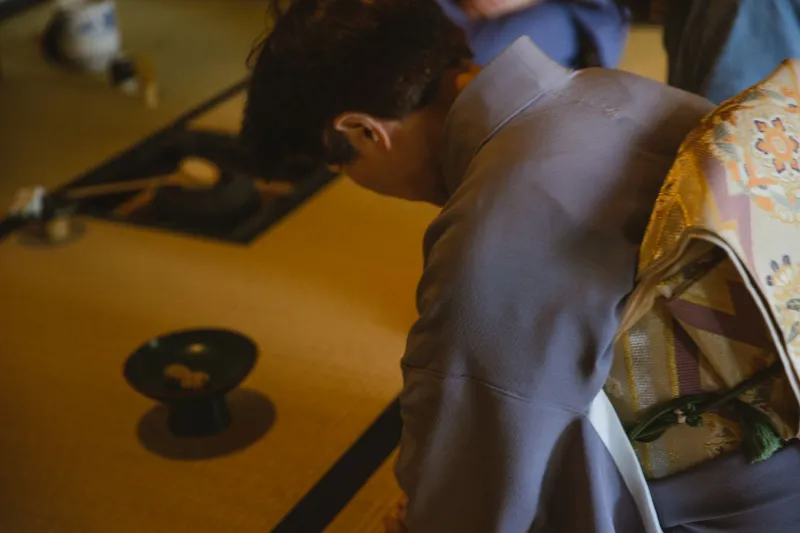
The origins of ichigo ichie are inseparable from the Japanese tea ceremony, known as chado or sado — the Way of Tea. The sixteenth-century tea master Sen no Rikyu is widely credited with embedding this principle into the ceremony's philosophy, though the precise phrase is attributed to his disciple, the feudal lord Ii Naosuke, who wrote about it in the nineteenth century.
The tea ceremony is not simply a ritual for brewing and drinking matcha. It is a structured meditation on impermanence. Every element — the arrangement of the room, the selection of the scroll hanging in the alcove, the choice of seasonal flowers, the particular ceramic bowl handed to a guest — is chosen with the understanding that this precise gathering will not be repeated. The host prepares as though this is the only occasion that will ever matter, because by the philosophy's own logic, it is.
This is not melancholy. It is, in fact, the opposite. The awareness of a moment's singularity is precisely what gives it weight.
What America's Culture of Documentation Gets Wrong
Consider how most Americans approach a meaningful experience today. A remarkable meal is photographed before it is tasted. A concert is viewed through a phone screen. A child's birthday is recorded in such detail that the parent is, in some measurable sense, absent from the very moment they are trying to preserve. The assumption underlying all of this is that capturing an experience is equivalent to having it — or that having it once is not quite enough, and some recorded version must be kept in reserve.
Ichigo ichie exposes this assumption as a kind of illusion. The photograph of the meal is not the meal. The video of the concert is not the concert. And the belief that an experience can be "saved" may, paradoxically, be what prevents a person from fully inhabiting it in the first place.
This is not an argument against photography or memory-keeping. It is, rather, a question worth sitting with: How often does the act of documenting a moment serve as a substitute for being present within it?
American culture is also deeply shaped by the assumption of repeatability. If a restaurant disappoints, one returns next week. If a conversation goes poorly, there is always another chance. This optimism has genuine virtues, but it carries a quiet cost: when everything can theoretically be done again, nothing carries the weight of finality. Ichigo ichie reintroduces that weight — not as a burden, but as an invitation to take the present seriously.
The Discipline of Irreplaceability
Practicing ichigo ichie is not a passive exercise. It requires something closer to active intention — a deliberate choice, made repeatedly, to treat each encounter as though it is the only one of its kind. This is more difficult than it sounds in a world engineered for distraction.
The tea ceremony provides a useful structural model. The ceremony works, in part, because it creates conditions that support presence: a designated space, a slowed pace, a set of gestures performed with care. The environment is designed to make full attention easier. Most Americans do not have a tea room, but the principle translates.
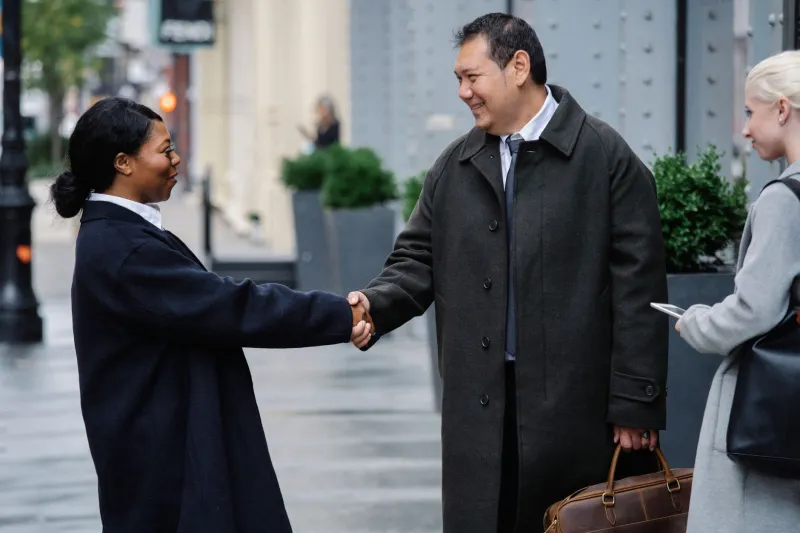
A dinner with a friend can be approached with the same intentionality. The phone is set aside — not as a rule imposed from outside, but as a recognition that this specific conversation, with this specific person, at this particular point in both of your lives, is happening once. The friend across the table is not a permanent fixture. People change, move, drift, age. The version of this person sitting here tonight will never be exactly this person again.
This is not a morbid thought. It is a clarifying one.
Practical Entry Points for an Ichigo Ichie Mindset
For those drawn to this philosophy but uncertain where to begin, a few deliberate practices can serve as useful starting points.
Designate one encounter each day as singular. Choose one conversation, one meal, or one shared activity and approach it with the explicit awareness that it is unrepeatable. This is not about performing presence — it is about genuinely orienting your attention toward what is in front of you.
Slow the pace of transitions. One reason moments blur together is that we move through them too quickly, treating each as a bridge to the next. Ichigo ichie is served by pausing before and after meaningful encounters — arriving early, lingering briefly at the end, allowing the experience to have a beginning and a close.
Resist the reflex to document. This does not mean never taking a photograph. It means noticing, honestly, when the camera is reaching for the moment before you have fully entered it. In those cases, consider waiting. The image can sometimes be taken after the experience has been absorbed rather than instead of it.
Bring something specific to the people you meet. The tea ceremony host selects each element with care because the guest matters. Applying this to daily life might mean remembering what a colleague mentioned last week, or preparing a question that reflects genuine curiosity about someone's life. Small gestures of specificity signal that this meeting, with this person, was anticipated and valued.
A Philosophy That Rewards Attention
Ichigo ichie does not promise that every moment will be extraordinary. It promises something more modest and, in some ways, more meaningful: that every moment is worthy of full attention, precisely because it cannot be recovered once it has passed.
In a culture that has optimized relentlessly for efficiency, convenience, and the ability to revisit and revise, there is something quietly countercultural about a philosophy that insists on the permanence of the present. What happens here, now, between these people — this is the only version of this that will ever exist.
That is not a reason for anxiety. It is a reason to pay attention.
Japan's tea masters understood this centuries before the smartphone made distraction the default condition of human experience. The lesson they left behind is neither complicated nor particularly easy. It simply asks that you show up — fully, deliberately, and with the awareness that the moment you are in is the only one of its kind you will ever be given.