The Power of the Pause: How Japan's Martial Concept of Ma'ai Is Redefining Stillness as Strength for Overstimulated Americans
The Power of the Pause: How Japan's Martial Concept of Ma'ai Is Redefining Stillness as Strength for Overstimulated Americans
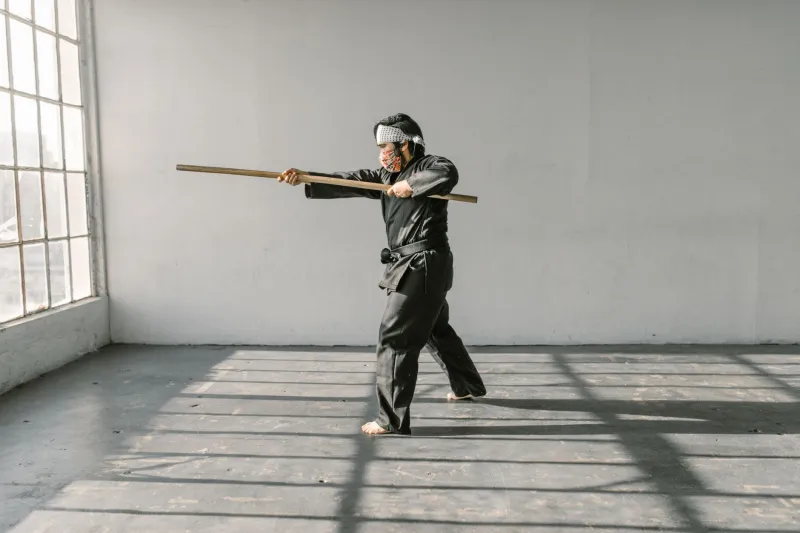
There is a moment in traditional Japanese swordsmanship — a fraction of a second before engagement — when a practitioner neither advances nor retreats. They hold. They read. They wait with complete, calibrated intention. This is ma'ai: the art of the interval, the discipline of the exact distance, the philosophy of knowing precisely when not to move.
For most Americans, that description sounds like hesitation. In Japan, it is considered mastery.
What Ma'ai Actually Means
The word ma'ai (間合い) is most commonly encountered in the context of Japanese martial arts — kendo, aikido, judo — where it refers to the spatial and temporal relationship between two opponents. It is not simply distance. It encompasses timing, awareness, psychological positioning, and the capacity to act or refrain from acting with equal precision.
A practitioner who understands ma'ai does not lunge prematurely. They do not retreat out of fear. They occupy a zone of strategic readiness, fully present, fully composed, and fully aware that the moment to move will arrive on its own terms — and that forcing it prematurely is itself a form of defeat.
What makes this concept remarkable is not its application on the dojo floor. It is how thoroughly it has migrated into broader Japanese cultural life — shaping the way people conduct business negotiations, host tea ceremonies, manage workplace dynamics, and navigate personal relationships. In Japan, the pause is not a gap in competence. It is a demonstration of it.
The Tea Ceremony and the Architecture of Restraint
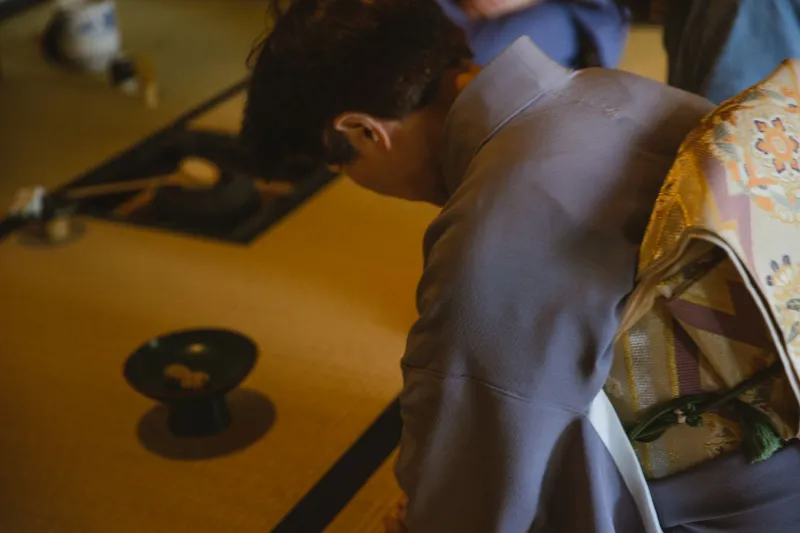
Few traditions illustrate ma'ai outside of combat more vividly than the Japanese tea ceremony, or chado. To a Western observer encountering it for the first time, the ceremony can feel almost uncomfortable in its deliberateness. Movements are slow, purposeful, and unhurried to a degree that American culture rarely tolerates.
But that discomfort is precisely the point. Every pause in the ceremony — the moment the host lifts the ladle, the silence before a guest receives the bowl, the stillness before any word is spoken — is not dead time. It is active space. The practitioner uses it to honor the moment, to signal presence, and to create a quality of attention that rushed interaction can never achieve.
This is ma'ai translated into hospitality: the deliberate calibration of distance and timing not between swords, but between people. It communicates, without words, that what is happening here matters — and that the person across from you is worth slowing down for.
Japan's Negotiation Culture and the Strategic Silence
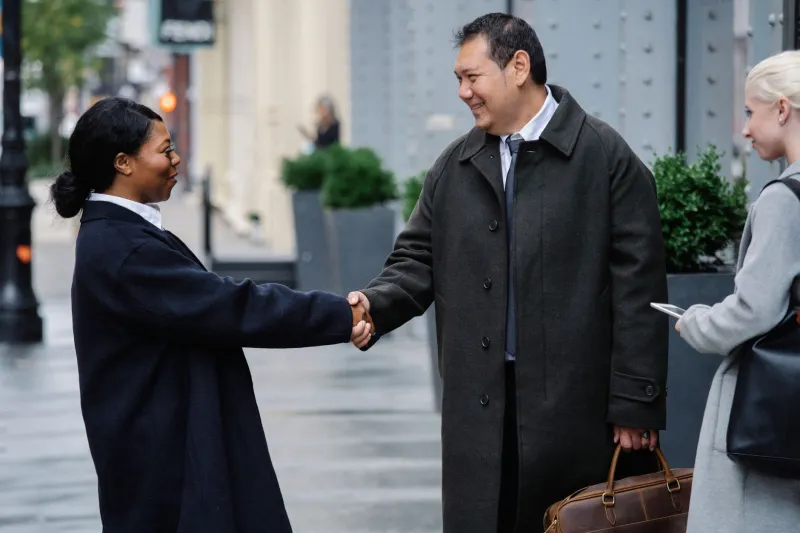
Anyone who has conducted business negotiations with Japanese counterparts will recognize a pattern that tends to unsettle American deal-makers: the pause. Where an American negotiator might interpret silence as confusion, discomfort, or an opening to fill with more talking, a Japanese negotiator often treats it as a deliberate instrument.
In Japanese business culture, silence during a negotiation is rarely empty. It is a form of considered response — a signal that the matter at hand is being weighed seriously, that no answer will be offered before it has been fully formed. To speak too quickly is to reveal that one has not truly listened. To fill every silence is to demonstrate anxiety rather than authority.
This practice traces directly to the ma'ai tradition. Just as the swordsman who rushes to strike often exposes himself to counterattack, the negotiator who rushes to close exposes their position. Holding the interval — maintaining composure within the pause — is understood as a sign of strength, not indecision.
For American professionals trained in environments that reward the loudest voice in the room, this inversion can be genuinely disorienting. And yet, cross-cultural business researchers have noted for decades that American negotiators frequently talk themselves into worse outcomes precisely because they cannot tolerate the silence that ma'ai demands.
The Modern Japanese Workplace and the Value of Strategic Withdrawal
Japan's work culture has its own well-documented complications, and this article does not romanticize them. But within that culture exists a practice that has no clean American equivalent: the deliberate, guilt-free withdrawal from stimulation during the workday as a means of restoring productive capacity.
This is distinct from the American concept of a "break," which tends to be understood as a reward for effort already expended, or a grudging concession to biological need. In certain Japanese professional contexts, the pause is understood as part of the work itself — a recalibration that makes the next period of engagement more precise, more considered, and more effective.
The influence of ma'ai here is philosophical rather than literal. It is the idea that strategic withdrawal — from a conversation, a decision, a problem — is not a failure of engagement but a refinement of it. Stepping back does not mean stepping away. It means choosing the right moment, from the right position, with the right information.
What America's Compulsive Busyness Is Costing Us
The United States has constructed an entire cultural identity around motion. Productivity culture, hustle mythology, the glorification of the packed schedule — these are not merely personal habits. They are embedded values, transmitted through workplaces, schools, and social media feeds that reward visible effort above almost everything else.
The cost of this orientation is increasingly well-documented: rising rates of burnout, decision fatigue, anxiety disorders, and a pervasive sense among Americans across income levels that they are perpetually behind. The irony is stark. A culture that prizes doing above all else is producing people who are exhausted, distracted, and less capable of doing anything well.
Ma'ai offers a structural alternative to this cycle — not as a retreat from ambition, but as a reconfiguration of it. The concept does not ask you to do less. It asks you to understand when to act, and to treat the interval before action as something with its own integrity and purpose.
In a culture that has largely forgotten how to pause, that is a radical proposition.
Practicing Ma'ai Without a Sword
For American readers encountering this concept for the first time, the practical applications are more accessible than they might appear. Ma'ai does not require a dojo or a tea ceremony. It requires only a willingness to treat the pause as a skill worth developing.
In conversation, it might mean allowing silence to exist after someone has finished speaking before rushing to respond — not out of awkwardness, but out of genuine consideration. In decision-making, it might mean building a deliberate interval between receiving information and acting on it, particularly when the stakes are high. In relationships, it might mean recognizing that stepping back from a conflict to recalibrate is not withdrawal, but wisdom.
The Japanese have understood for centuries what the best athletes, negotiators, and leaders tend to discover on their own: that the quality of your action is determined largely by the quality of your pause. The distance you maintain — from a problem, a person, a moment of pressure — is not empty space. It is where clarity lives.
And in a country that rarely stops moving long enough to find out, that may be the most valuable import Japan has yet to offer.