Seventy-Two Reasons to Pay Attention: How Japan's Ancient Micro-Season Calendar Offers Overscheduled Americans a New Way to Measure Time
Seventy-Two Reasons to Pay Attention: How Japan's Ancient Micro-Season Calendar Offers Overscheduled Americans a New Way to Measure Time
Somewhere between the end of summer and the beginning of fall, most Americans flip a mental switch. The calendar says September, the stores fill with pumpkin-flavored everything, and the season is declared changed. What actually happened outside — the gradual cooling of morning air, the particular slant of afternoon light, the first week the cicadas went quiet — passes largely unnoticed. Life moves too fast for that kind of attention.
Japan, for centuries, operated by a different logic entirely.
A Calendar Built Around Listening
The Koyomi is Japan's traditional lunisolar calendar, a system imported from China and refined over generations into something distinctly Japanese in its sensitivity and precision. At its core, the Koyomi divides the solar year into 24 major seasonal nodes called sekki, each representing roughly two weeks of the year. But Japanese scholars and farmers did not stop there. Each of those 24 nodes was further divided into three micro-seasons, producing 72 distinct periods — the shichijūni kō — each lasting approximately five days.
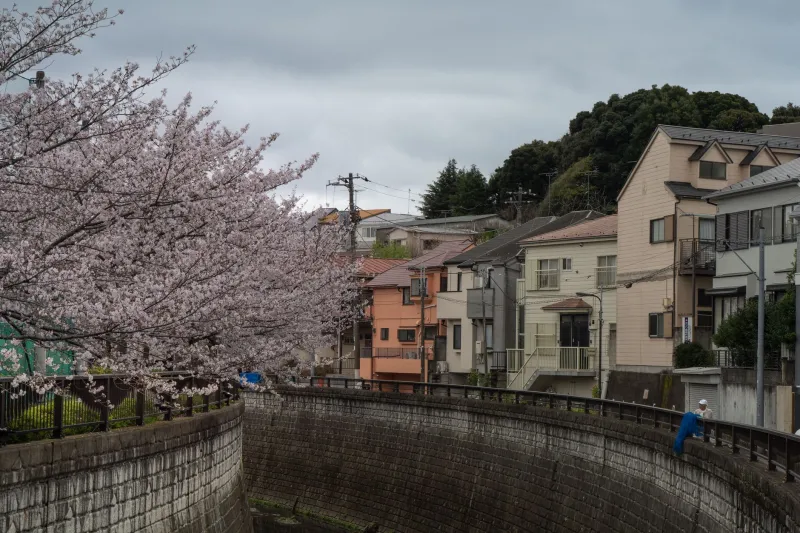
These micro-seasons were not named after saints or kings. They were named after the world as it actually behaved. Higashi kaze kōri wo toku — the east wind melts the ice. Uguisu naku — the bush warbler sings. Takenoko shōzu — bamboo shoots sprout. Kaeru hajimete naku — the frogs begin to call. Each name was a small observation, a noticing, a record of what the land was doing at a particular moment in its annual conversation with the sun.
This was not poetry for its own sake. It was a practical system. Farmers used it to know when to plant and when to harvest. Fishermen read it to anticipate the movement of fish. Cooks used it to understand what ingredients were at their peak. Physicians consulted it when advising patients on diet and rest. The micro-seasons were, in the most literal sense, a user's manual for living in a particular place at a particular time.
When the Calendar Becomes a Practice
What made the shichijūni kō remarkable was not merely its granularity but its underlying philosophy. The system operated on the assumption that time was not a neutral container into which human activity was poured. Time, in this framework, had texture. It had character. Each five-day window carried its own qualities, its own demands, its own small gifts.
To be aware of which micro-season you were inhabiting was to be present in a way that transcended scheduling. It asked people to look up from their work and register what the world was doing. Was the peach blossom opening? Were the deer shedding their antlers? Had the cold finally broken enough for earthworms to surface? These were not trivial questions. They were orientation points — ways of knowing where you stood in the larger story of the year.
Japanese culture absorbed this sensibility deeply. The tradition of shun — eating foods at the precise peak of their seasonal flavor — is inseparable from this calendrical awareness. The practice of changing one's wardrobe on specific dates, known as koromogae, follows a similar logic. Even the aesthetic concept of mono no aware — the bittersweet awareness of impermanence — is rooted in the same attentiveness to nature's transitions that the shichijūni kō formalized.
What Americans Lost When the Seasons Became Decoration
The United States was never without its own seasonal traditions. Indigenous communities across North America maintained sophisticated ecological calendars, tracking the movements of animals, the flowering of plants, and the behavior of rivers with a precision that rivaled anything in the Koyomi. European settlers brought their own agricultural rhythms. For much of American history, ordinary life was organized around what the land was doing.
That relationship eroded steadily through industrialization, and it collapsed almost entirely in the twentieth century. Central heating and air conditioning made indoor temperature a constant. Global supply chains ensured that strawberries were available in January and butternut squash in June. Electric lighting severed the ancient connection between the length of the day and the rhythm of sleep. The seasons became, for most Americans, a matter of what was on sale at Target and which Starbucks drink had returned to the menu.
The cost of this severance is difficult to quantify but easy to feel. Psychologists who study what they call nature deficit disorder — a term popularized by author Richard Louv — have documented the anxiety, restlessness, and disorientation that accumulates when people lose contact with the natural world. Rates of seasonal affective disorder in the United States are among the highest in the developed world. The country is simultaneously overstimulated and profoundly under-nourished by the kind of quiet, grounding attention that the shichijūni kō was designed to cultivate.
Five Days at a Time
The practical appeal of the micro-season framework, for an American audience, is precisely its scale. Overhauling one's entire relationship with time is an overwhelming proposition. Committing to notice the world for five days at a stretch is not.
Several contemporary practitioners in both Japan and the West have begun adapting the shichijūni kō for modern life. Some keep seasonal journals, recording small observations about light, temperature, and plant life during each micro-season. Others use the framework to guide their cooking, seeking out whatever is genuinely local and ripe rather than defaulting to the year-round availability of the industrial food system. A growing number of wellness practitioners in the United States have incorporated micro-seasonal awareness into mindfulness curricula, finding that it offers clients a concrete anchor for presence that abstract meditation instructions sometimes fail to provide.
None of this requires adopting Japanese culture wholesale or pretending that a calendar developed for the climate of ancient China maps perfectly onto the American Midwest or the Gulf Coast. The deeper principle — that time has texture, that the earth is always communicating something, and that paying attention to those communications is a form of wisdom — translates without translation.
The Reward of Noticing
At Honke Gohoubi, the traditions we explore share a common thread: they ask something of the people who practice them. They ask for attention, for intentionality, for a willingness to slow down long enough to receive what is being offered. The shichijūni kō asks no less. It asks you to step outside during the five days when the cold dew forms and simply notice that the cold dew has formed. It asks you to register that the swallows have departed, that the chrysanthemums are blooming, that the mountain streams are beginning to freeze at their edges.
These are small observations. But small observations, made consistently over a year, accumulate into something larger: a felt sense of belonging to a place and a time, a recognition that you are not merely passing through the world but genuinely inhabiting it.
In a culture that measures productivity in quarterly outputs and gauges wellness by the latest app's metrics, that kind of belonging may be the most countercultural reward of all.