The Invisible Architecture of Courtesy: How Japan's Concept of Teinei Turns Every Small Gesture Into an Act of Reverence
The Invisible Architecture of Courtesy: How Japan's Concept of Teinei Turns Every Small Gesture Into an Act of Reverence
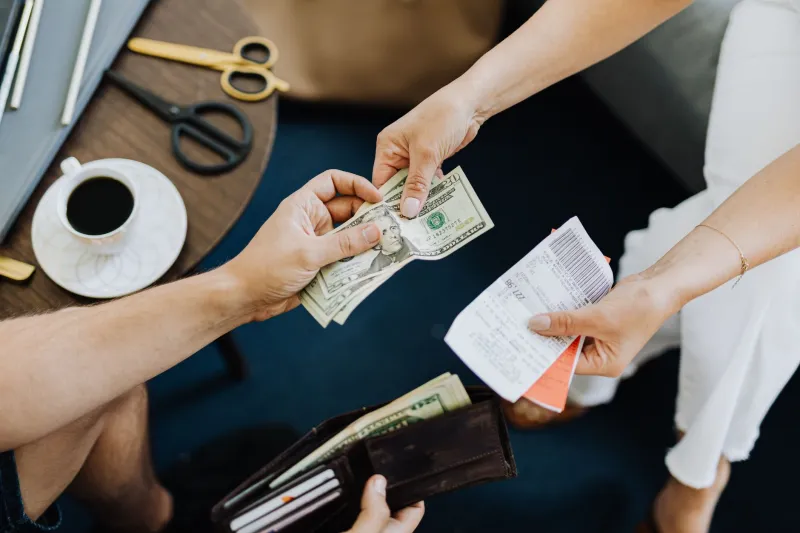
There is a particular moment that travelers to Japan often describe, one that catches them off guard precisely because it is so unremarkable in its setting. A cashier at a convenience store — not a fine restaurant, not a luxury hotel, but a brightly lit konbini somewhere in Osaka or Sendai — turns to hand over a receipt. She does not slide it across the counter. She does not drop it beside the change. She presents it with both hands, facing outward toward the customer, and offers a brief, sincere bow before returning to her register. The transaction is complete in under thirty seconds. And yet something about it lingers.
What that traveler has witnessed is not simply good customer service training. It is teinei — a Japanese concept that translates, inadequately, as "politeness" or "courtesy," but which in practice functions more like a moral architecture. Teinei is the invisible structure beneath the surface of Japanese daily life, the principle that every human interaction, no matter how fleeting or transactional, deserves to be handled with full attention and genuine care.
More Than Manners: What Teinei Actually Means
The word teinei (丁寧) carries connotations that the English word "polite" simply cannot hold. While politeness in the American cultural imagination tends to function as a social lubricant — a way of keeping interactions smooth and conflict-free — teinei implies something closer to a commitment. It asks its practitioner to be careful, to be thorough, to treat the person in front of them as someone whose time and dignity are worth protecting.
In linguistic terms, teinei is also the root of teineigo, the formal register of Japanese speech used to show respect in everyday conversation. This is not a coincidence. In Japan, the very grammar of language has been structured to encode courtesy into its bones. How you speak to someone is itself a form of conduct, inseparable from how you act toward them.
But teinei is not limited to words. It lives in the way a shopkeeper wraps a purchase — not carelessly, not mechanically, but with deliberate folds and a quiet attention to presentation. It lives in the way a host prepares a guest room before an arrival, smoothing the futon, placing a small seasonal flower in a vase, adjusting the temperature so the space already feels welcoming when the door opens. It lives, perhaps most visibly to outsiders, in the ritual of the two-handed exchange: receipts, business cards, gifts, and even restaurant menus are frequently offered and received with both hands as a physical expression of the care being extended.
A Culture That Treats Attention as a Form of Respect
To understand teinei is to understand something fundamental about how Japanese culture conceptualizes the relationship between inner character and outward behavior. In many Western traditions, there is a familiar distinction between what a person truly feels and what social convention requires them to express. Authenticity, in this framework, often means overriding convention. You are encouraged to "just be yourself," to skip the formalities, to let people know you are comfortable enough with them to drop the pretense.
Teinei operates from a different premise entirely. It does not view careful, attentive behavior as a mask worn over genuine feeling. Rather, it holds that how you treat someone is itself an expression of who you are. The effort you invest in a small gesture — the extra moment spent wrapping something properly, the deliberate care in how you hand over an object — is not performance. It is character made visible.
This philosophy has practical consequences that ripple through Japanese society in ways Americans might find startling. In Japan, it is common for a store employee to walk a customer to the correct aisle rather than simply pointing. It is common for a host to stand at the door and continue bowing until a departing guest's car has disappeared from view. These are not performances staged for special occasions. They are the ordinary texture of daily life, the unremarkable expression of a culture that has decided, at a foundational level, that attention is itself a form of respect.
What American Casualness Has Quietly Cost
The United States has its own virtues when it comes to interpersonal culture — warmth, directness, a democratic informality that can make strangers feel immediately welcome. These are genuine strengths, and it would be both unfair and inaccurate to frame American social culture as simply careless. But there is a specific mode of contemporary American life that is worth examining honestly: the culture of casual convenience.
Over the past few decades, American social norms have drifted steadily toward frictionlessness. Transactions are optimized. Interactions are abbreviated. The ability to skip the formalities — to text instead of call, to tap instead of hand over, to acknowledge without fully engaging — is marketed as efficiency. And in many contexts, it is efficient. But efficiency and teinei are not the same thing, and they do not always want the same things from a human encounter.
What teinei asks — and what the casual convenience model quietly discourages — is that we treat small moments as if they matter. That we do not mentally leave a conversation before it is finished. That we hand something to another person as if the act of handing itself carries meaning. This is not nostalgia for a more formal era. It is a question about what we signal to one another when we stop investing attention in the ordinary.
When a cashier drops change on the counter rather than placing it in a customer's palm, something is communicated, even if neither party consciously registers it. When an email goes out without a greeting or a closing, something is communicated. When a host does not prepare a space before a guest arrives, something is communicated. Teinei is, among other things, a reminder that these small communications accumulate into the total experience another person has of being treated by you.
The Guest Who Arrives Empty-Handed
There is an old Japanese social anxiety around arriving as a guest without an appropriate gift — a concern that is well documented and often cited in discussions of Japanese gift-giving culture. But there is a quieter, less-discussed version of arriving empty-handed: the guest who shows up without attention. Who is already thinking about the next thing. Who accepts hospitality without fully receiving it.
Teinei, at its deepest level, is a remedy for this kind of absence. It is a cultural insistence that presence — real, attentive, careful presence — is the most fundamental gift one person can offer another. The two-handed receipt. The smoothed guest room. The bow held until the car disappears. These are not relics of a more formal age. They are technologies for staying present, small rituals that force the practitioner to slow down and acknowledge that the person in front of them is worth the pause.
For Americans navigating a world that increasingly rewards speed and penalizes deliberateness, the concept of teinei offers something quietly radical: the suggestion that how we do small things is not separate from who we are — it is who we are, expressed in the only currency that cannot be faked. Attention, given fully, one moment at a time.