The Farewell That Never Ends: Japan's Forgotten Rituals of Departure and What They Reveal About a Culture That Honors the Last Moment as Much as the First
The Farewell That Never Ends: Japan's Forgotten Rituals of Departure and What They Reveal About a Culture That Honors the Last Moment as Much as the First
There is a particular kind of American goodbye that most of us recognize immediately. The host glances at the clock. Someone reaches for their coat. A few words are exchanged near the door — warm enough, hurried enough — and then the door closes, often before the departing guest has made it halfway down the driveway. The gathering is over. The host is already somewhere else in their mind.
In Japan, this moment would be unthinkable.
Not because Japanese hosts are incapable of fatigue or eager for solitude, but because the culture surrounding departure — the rituals, the gestures, the sustained physical and emotional presence that continues well after a guest has announced their intention to leave — reflects something fundamentally different about how human connection is understood and honored. The farewell, in the Japanese tradition, is not a postscript to hospitality. It is one of its most expressive acts.
What Okuri-Dashi Actually Means
The term okuri-dashi translates loosely as "the act of seeing someone off," but this translation does little justice to its depth. In its fullest expression, okuri-dashi encompasses everything from the formal moment a host rises to accompany a departing guest, to the physical escorting through the home, through the genkan — the entryway threshold — and often beyond, into the street, the hallway of an apartment building, or the path toward a waiting taxi or train station.
The practice is not a single gesture. It is a sequence, and each step within that sequence carries meaning.
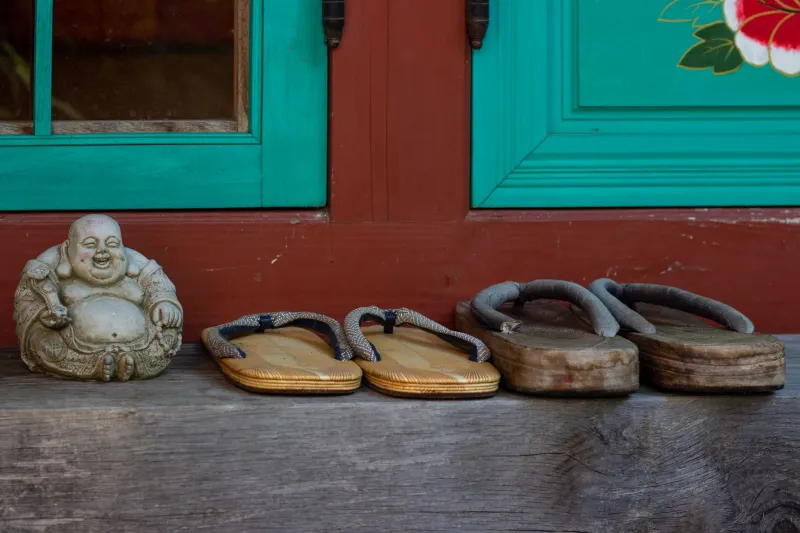
When a guest in Japan signals their intention to leave, the host does not simply nod and remain seated. They rise. They accompany the guest through the home's interior, often pausing to offer final words of gratitude or care. At the genkan — that liminal, symbolically charged space between the domestic interior and the outside world — there is a careful choreography: the guest steps down first, retrieves their shoes, and the host remains elevated on the step, maintaining a position that is both physically and symbolically attentive. Bows are exchanged. Words of safe travel, of appreciation, of invitation to return are offered — and they are meant.
But for many hosts, the ritual does not end at the front door.
Standing Until the Figure Disappears
One of the most striking and, to Western eyes, almost disorienting aspects of Japanese departure customs is what happens after the door should, by any practical logic, have closed.
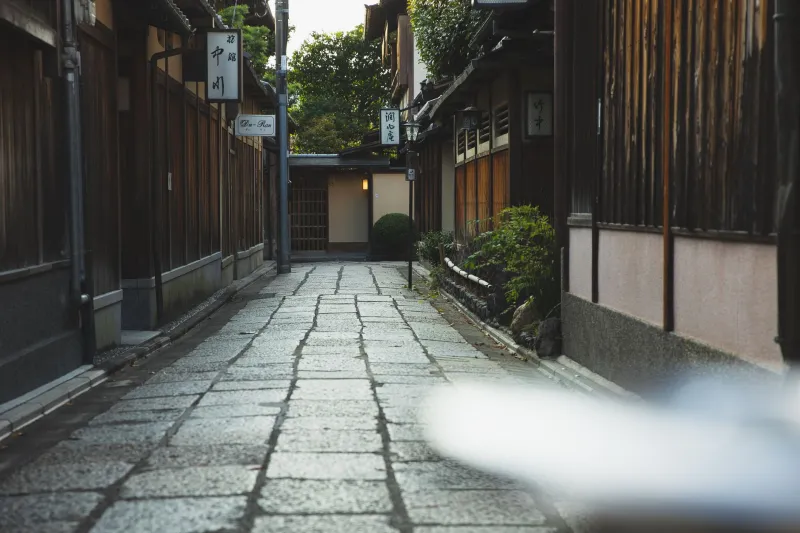
In traditional practice — and still observed in many households, ryokan inns, and formal settings today — the host remains at the entrance, watching, until the departing guest is entirely out of sight. Not a brief glance. Not a wave and a turn. A sustained, attentive vigil that communicates, without a single additional word, that the guest's presence mattered until the very last visible moment.
Staff at traditional Japanese inns are perhaps the most well-documented practitioners of this custom. Guests who have stayed at a classic ryokan frequently describe the experience of looking back from the road or the parking area to find the entire staff still assembled at the entrance, bowing, watching, waiting. It is an image that tends to stay with people long after the trip has ended — partly because it is beautiful, and partly because it makes them aware, often for the first time, of how rarely anyone has ever watched them go.
The Philosophy Underneath the Practice
To understand why these customs exist, it helps to understand the broader Japanese philosophy of omotenashi — a concept that has received considerable attention in recent years but is frequently reduced to its most surface-level definition of "hospitality" or "service."
Omotenashi, more precisely, describes a form of care that is anticipatory, selfless, and continuous. It does not begin when a guest arrives and end when they leave. It operates as a sustained orientation toward the other person — their comfort, their dignity, their experience of being genuinely seen. Departure rituals are not an extension of omotenashi so much as one of its truest expressions. The moment a guest is no longer present to be impressed, no longer able to offer immediate feedback or social reciprocity, is precisely the moment when the depth of care becomes most visible.
Standing at the door until a figure disappears around a corner is not performative. It is, in fact, the opposite of performance — because there is no longer an audience to perform for. The guest cannot see the host's face. They may not even know they are being watched. The gesture exists for its own sake, as an act of private devotion to the relationship.
What America's Goodbyes Reveal About American Values
It would be easy — and unfair — to simply condemn American farewell habits as careless. American informality has its own warmth and its own logic. The casual goodbye, the easy dispersal from a backyard cookout or a dinner party, reflects a cultural ease with impermanence and a certain democratic resistance to ceremony for ceremony's sake.
But there is something worth sitting with in the contrast.
In a culture that increasingly struggles with loneliness, with the sense that relationships are thin and transactional, with the feeling that one's presence is rarely fully received — the Japanese practice of okuri-dashi asks a pointed question. What would it mean to treat the last moment of someone's visit with the same intentionality as the first? What would it communicate to a friend, a colleague, a family member, if you walked them to their car? If you stood at the door until their taillights disappeared? If the final thing they saw, looking back, was your face, still turned toward them?
The answer, almost certainly, is that it would mean something. Something significant. Something that most people in this country are not currently offering one another.
A Small Practice With an Outsized Effect
Adopting Japanese departure rituals wholesale is neither practical nor the point. Cultural practices carry their meaning within the contexts that shaped them, and gestures transplanted without understanding can become hollow quickly.
But the underlying principle — that the ending of a gathering deserves as much care and presence as its beginning — is both universal and urgently applicable. It requires no special knowledge, no particular cultural fluency. It requires only the decision to slow down, to accompany, to remain present for a few minutes longer than habit demands.
Walk your guest to the door. Step outside with them. Watch until they've reached their car. These are small acts. But in a world that has largely stopped performing them, they carry the weight of something rare: the unmistakable sense that a person's departure, like their arrival, was genuinely noticed.
In Japan, this is not considered exceptional hospitality. It is simply what care looks like when it is taken seriously — all the way to the very last moment of connection.